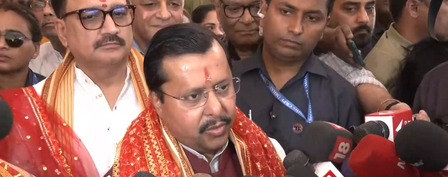
West Bengal Culture and Traditions to Thrive Under PM Modi’s Leadership, Says Nitin Nabin
New Delhi, May 5 – As the Bharatiya Janata Party (BJP) secured a major electoral victory, party leader Nitin Nabin on Tuesday expressed confidence that the rich culture and traditions of West Bengal will flourish under the leadership of Prime Minister Narendra Modi. In a statement that has resonated across political and cultural circles, Nabin highlighted the central government’s commitment to preserving and promoting the state’s heritage.
Table of Contents
Nitin Nabin’s Vision for West Bengal’s Cultural Renaissance
In a recent address, BJP leader Nitin Nabin emphasized that the cultural and traditional fabric of West Bengal will see unprecedented progress under Prime Minister Modi’s governance. Nabin stated, “The unique heritage of Bengal—from its folk music and dance to its literary legacy—will be safeguarded and promoted. PM Modi’s leadership ensures that regional identities are celebrated, not suppressed.”
This statement comes amid ongoing discussions about the preservation of Bengali culture in the face of rapid modernization. Nabin’s remarks align with the BJP’s broader narrative of “cultural nationalism,” which seeks to integrate regional traditions into a unified national framework. [Internal Link: Explore more about BJP’s cultural policies in West Bengal].
PM Modi’s Track Record in Heritage Preservation
Prime Minister Narendra Modi has long been associated with initiatives aimed at reviving India’s cultural heritage. Under his tenure, projects like the “Museum of Indian Culture” and the “Heritage City Development and Augmentation Yojana” (HRIDAY) have been implemented. For West Bengal, this could mean increased funding for the preservation of historical sites such as the Victoria Memorial and the Sundarbans’ traditional fishing communities.
According to cultural historians, the Modi government has allocated significant resources to intangible cultural heritage, including the promotion of Bengali folk arts like Baul music and Chhau dance. [External Link: UNESCO’s report on India’s cultural preservation efforts under PM Modi].
Political Context: BJP’s Victory and Cultural Promises
The BJP’s recent electoral success in West Bengal has been attributed in part to its promises of cultural revival. Nitin Nabin’s comments underscore the party’s commitment to addressing the concerns of Bengali intellectuals and artists who have felt marginalized in recent years. “The culture of West Bengal is not just a state asset; it is a national treasure,” Nabin added.
This political shift has sparked debates about the role of government in cultural affairs. While some critics argue that cultural promotion should remain apolitical, supporters contend that state support is essential for the survival of dying art forms. [Internal Link: Read about the controversy surrounding government-funded cultural projects].
Impact on Local Traditions and Art Forms
Specific traditions that could benefit from this renewed focus include the Durga Puja festival, which was recently inscribed on UNESCO’s Representative List of the Intangible Cultural Heritage of Humanity. Additionally, the traditional handloom industry of Bengal, particularly the weaving of Baluchari and Jamdani saris, may receive a boost through government schemes like “One District One Product.”
Local artisans have expressed cautious optimism. “If the government truly supports us with fair wages and global exposure, our crafts can survive another century,” said a weaver from Murshidabad. [External Link: UNESCO’s page on Durga Puja’s cultural significance].
Frequently Asked Questions (FAQ)
What did Nitin Nabin say about West Bengal’s culture?
Nitin Nabin stated that the culture and traditions of West Bengal will progress under Prime Minister Narendra Modi’s leadership, emphasizing the central government’s commitment to preserving the state’s heritage.
How has PM Modi contributed to cultural preservation in India?
PM Modi has launched initiatives like the Heritage City Development Scheme (HRIDAY) and promoted intangible cultural heritage through UNESCO collaborations, benefiting art forms like Baul music and Durga Puja.
What specific traditions in West Bengal might benefit from this?
Traditions such as Durga Puja, Chhau dance, Baul music, and handloom weaving (e.g., Baluchari and Jamdani saris) are expected to receive enhanced government support.
Is there any controversy around government involvement in culture?
Yes, some critics argue that cultural promotion should be apolitical, but supporters believe state support is crucial for preserving endangered art forms.
Comments (2)
This is a highly insightful piece. The shifts in the technological landscape are truly unprecedented and I'm eager to see how it affects global markets in the next quarter.
I completely agree with the points made here. However, I think the regulatory aspect will be the biggest hurdle moving forward before we see mass adoption.