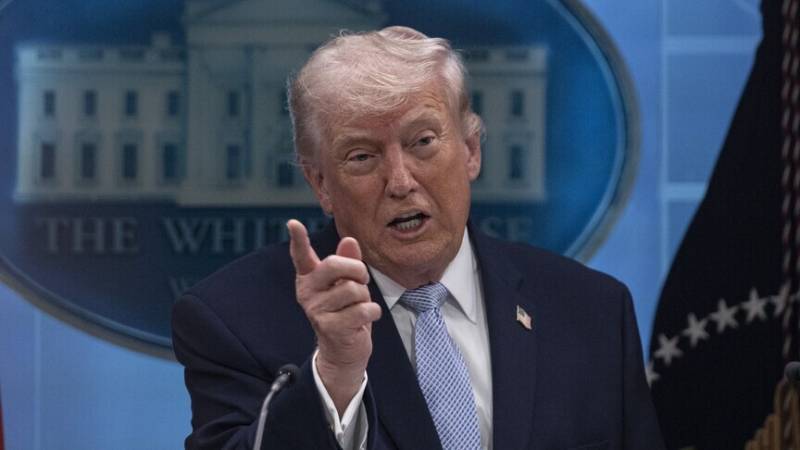
Trump Confirms Iran Seeks Nuclear Deal, Urges Congress to Allow Negotiations to Proceed
Table of Contents
Trump’s Statement on Iran Negotiations
US President Donald Trump declared early Monday that Iran is actively seeking a diplomatic agreement with the United States, expressing strong confidence that ongoing negotiations will yield a favorable outcome. In a series of statements, Trump urged his political critics to step aside and allow the negotiation process to move forward without interference.
"Iran wants a deal, and I believe we can make a very good one. This is the best path for peace and stability," Trump said, reiterating his preference for direct talks over military confrontation. The President’s comments come amid heightened tensions in the Middle East, particularly concerning Iran’s nuclear program and its regional military activities.
For more context on the current state of U.S.-Iran relations, see [Internal Link: Analysis of US Iran Diplomatic Efforts in 2025].
Background on U.S.-Iran Nuclear Talks
From the 2015 JCPOA to the Present
The current negotiations represent a fresh attempt to revive or replace the Joint Comprehensive Plan of Action (JCPOA), which the Trump administration withdrew from in 2018. Since then, Iran has expanded its uranium enrichment program, prompting renewed diplomatic efforts. Trump’s recent statements suggest a shift toward engagement rather than the “maximum pressure” sanctions policy of his previous term.
According to [External Link: Reuters Report on Iran’s Nuclear Stockpile], Iran’s enrichment levels remain close to weapons-grade, making the stakes of any negotiation exceptionally high.
Key Players and Timeline
Talks are being facilitated by European Union intermediaries, with indirect U.S. participation. The timeline for a potential agreement remains uncertain, but Trump’s optimism signals a possible breakthrough in the coming weeks. [Internal Link: Timeline of Iran Nuclear Negotiations 2024-2025].
Why Critics Oppose the Iran Deal Process
Despite Trump’s confidence, the negotiations face fierce opposition from several quarters. Republican hawks argue that Iran cannot be trusted to honor any agreement, citing past violations and continued support for militant proxies in the region. Democratic critics express concern that the deal may not be comprehensive enough to address Iran’s ballistic missile program or human rights abuses.
Israeli Prime Minister Benjamin Netanyahu has also voiced strong reservations. In a recent interview, he warned that a "bad deal" could embolden Iran. For more details, see [External Link: BBC Analysis on Israel’s Position on Iran].
Analysis: What a New Deal Could Mean for the Region
Economic and Oil Market Implications
A successful agreement could lead to the lifting of sanctions on Iranian oil exports, potentially lowering global energy prices. This would have a direct impact on U.S. gasoline prices and inflationary pressures. Conversely, failure could escalate tensions and disrupt shipping lanes in the Persian Gulf.
Security and Geopolitical Consequences
Analysts suggest that a new nuclear deal might reduce the risk of a regional war but could also empower Iran economically. The outcome will significantly influence U.S. relations with Saudi Arabia, the UAE, and other Gulf states, as well as the broader balance of power in the Middle East.
Comments (2)
This is a highly insightful piece. The shifts in the technological landscape are truly unprecedented and I'm eager to see how it affects global markets in the next quarter.
I completely agree with the points made here. However, I think the regulatory aspect will be the biggest hurdle moving forward before we see mass adoption.