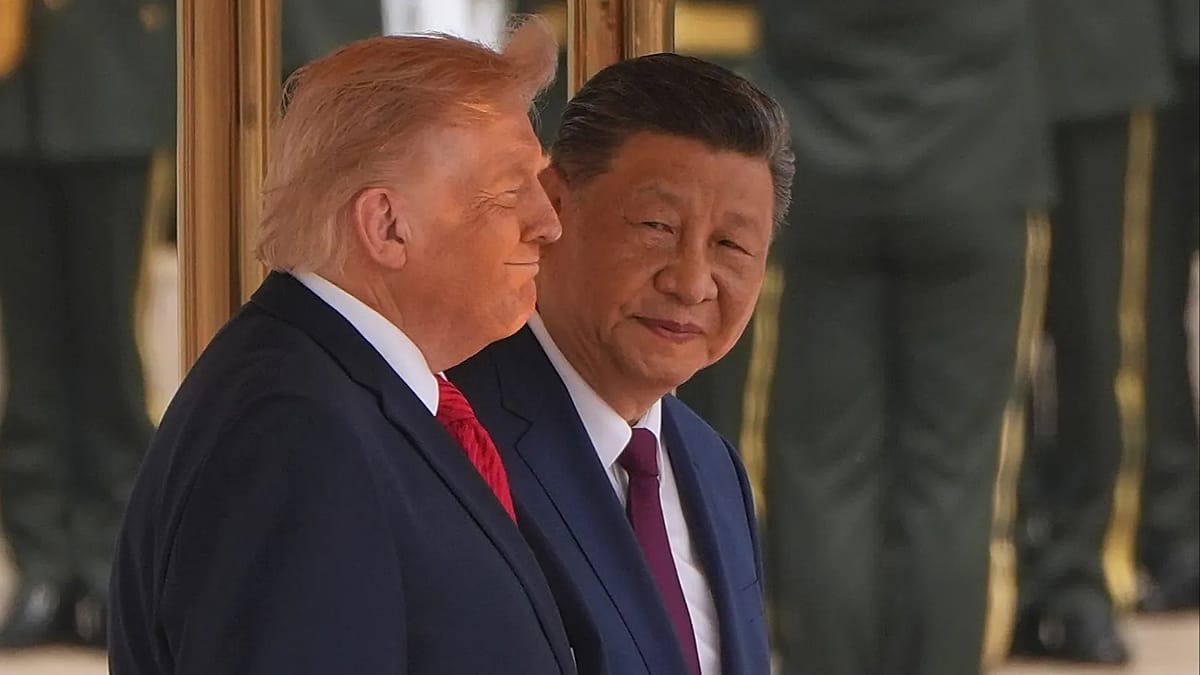
Xi Jinping Pledges Wider Market Access for US Firms During Trump’s Beijing Visit
Chinese President Xi Jinping used US President Donald Trump’s state visit to Beijing to deliver a strong signal to American business leaders: China is committed to further opening its economy and welcoming foreign investment. The pledge, made during a high-profile meeting, underscores a strategic effort to stabilize bilateral trade relations and attract US capital into key Chinese sectors.
Key Takeaways from Xi’s Pledge
During the bilateral meeting, Xi Jinping emphasized that China will “open its door wider” and create a more favorable environment for American companies. This commitment is seen as a direct response to long-standing US concerns about market access, intellectual property protection, and regulatory transparency. The pledge covers multiple sectors, including finance, technology, and manufacturing.
For more context on China’s evolving trade policies, see [Internal Link: China’s Recent Trade Policy Reforms and Their Global Impact].
Strategic Timing of the Announcement
The announcement came during a critical juncture in US-China relations, as both nations seek to manage trade imbalances and geopolitical tensions. By making this pledge in front of Trump and American CEOs, Xi aimed to build trust and demonstrate China’s willingness to engage in mutually beneficial economic cooperation.
Economic Signals Behind the “Open Door” Promise
Xi’s statement is part of a broader Chinese strategy to shift from export-led growth to a more consumption-driven, innovation-based economy. Welcoming US firms is intended to boost competition, attract advanced technology, and integrate China more deeply into global supply chains.
For an authoritative analysis of China’s economic transformation, refer to [External Link: World Bank Report on China’s Economic Outlook and Foreign Investment Trends].
Sectors Most Likely to Benefit
Analysts predict that US companies in the following sectors will see the most immediate opportunities:
- Financial Services: Easier access to China’s banking, insurance, and asset management markets.
- Technology & Innovation: Reduced barriers for tech firms in cloud computing, AI, and semiconductors.
- Manufacturing & Automotive: Potential for increased joint ventures and reduced ownership restrictions.
What This Means for US Firms Operating in China
For American businesses already in China, Xi’s pledge could lead to faster licensing approvals, fewer regulatory hurdles, and greater participation in government procurement. For new entrants, it signals a more predictable and welcoming investment climate.
To understand how this compares with previous trade negotiations, read [Internal Link: US-China Trade Deal History: From Tariffs to Talks].
Challenges Remain Despite Optimism
Despite the positive rhetoric, experts caution that implementation will be key. Past pledges have sometimes been followed by slow regulatory changes or renewed restrictions. US firms will watch closely for concrete policy adjustments in areas like data localization, cybersecurity laws, and intellectual property enforcement.
For a detailed analysis of ongoing trade friction, see [External Link: Peterson Institute for International Economics Analysis on US-China Trade Relations].
Frequently Asked Questions
What did Xi Jinping specifically promise to US firms?
Xi promised to “open the door wider” to American companies, implying greater market access, reduced barriers, and a more transparent regulatory environment across multiple sectors.
Why is this pledge important for US-China relations?
It signals a potential de-escalation in trade tensions and a mutual interest in maintaining economic interdependence, which is crucial for global economic stability.
Which US companies are most likely to benefit?
Firms in financial services, technology, and manufacturing are expected to see the most immediate benefits, though the impact will depend on specific policy changes.
Will this affect tariffs or trade tariffs?
Xi’s statement did not directly address tariffs, but it sets a cooperative tone that could lead to further negotiations on trade imbalances and tariff reductions.
How soon will US firms see changes?
Some changes may be announced in the short term, but full implementation could take months or years, depending on regulatory reforms and bilateral negotiations.
Comments (2)
This is a highly insightful piece. The shifts in the technological landscape are truly unprecedented and I'm eager to see how it affects global markets in the next quarter.
I completely agree with the points made here. However, I think the regulatory aspect will be the biggest hurdle moving forward before we see mass adoption.